The Quick Answer
Cats knead blankets because the soft texture makes them feel safe, comfortable and relaxed. This instinctive behavior begins during kittenhood, when kittens press their paws against their mother while nursing.
Many cats continue kneading as adults, especially when they are preparing to sleep or enjoying a peaceful moment.
What Does Cat Kneading Look Like?
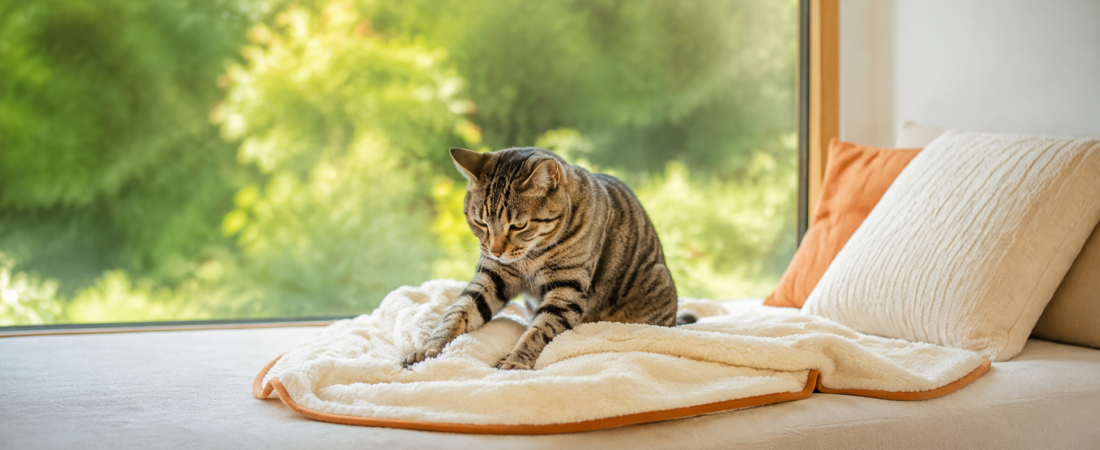
Kneading is a rhythmic movement in which a cat alternates its front paws against a soft surface. Because the movement resembles someone kneading dough, many pet parents affectionately call it “making biscuits.”
Some cats knead gently with their claws tucked away. Others extend their claws, purr, close their eyes or even drool slightly while doing it.
Every cat has a different kneading style, and some cats do not knead at all.
Why Do Cats Knead Blankets?
There is no single explanation that applies to every cat. However, experts believe several natural instincts may contribute to this behavior.
It Reminds Them of Kittenhood
Kittens knead their mother’s belly while nursing. The movement helps stimulate milk flow and becomes associated with warmth, food and security.
When an adult cat kneads a soft blanket, the texture may bring back that early feeling of comfort. This does not mean the cat believes the blanket is its mother. The behavior has simply remained connected to relaxation.
They Are Preparing a Comfortable Place to Sleep
You may notice your cat kneading a blanket before curling up for a nap.
One theory suggests that the ancestors of domestic cats pressed down grass and other soft materials to create a comfortable resting place. Modern cats may still perform a similar movement, even when their blanket is already soft.
They Feel Safe and Content
Kneading commonly occurs when cats feel peaceful and secure. A relaxed body, gentle purring, slow blinking and a comfortable sleeping position are all signs that your cat is probably enjoying the moment.
If your cat kneads a blanket beside you—or kneads your lap—it may mean they feel safe in your presence.
They May Be Marking Their Favorite Spot
Cats have scent glands around their paw pads. Kneading may leave a subtle scent on a blanket, bed or person.
Humans cannot usually detect this scent, but it may help a cat identify the area as familiar and safe.
The Blanket Has an Appealing Texture
Cats often prefer soft materials such as fleece, wool or plush fabric. These textures may feel warm and comforting beneath their paws.
A favorite blanket may also carry familiar household scents, making it an especially inviting place to knead and rest.
Why Does My Cat Use Its Claws While Kneading?
Extending and retracting the claws can be a natural part of kneading. Your cat is not trying to damage the blanket or hurt you.
If the claws are uncomfortable when your cat kneads your lap, place a thick blanket between your body and the cat. Regular nail trimming can also reduce accidental scratches and fabric damage.
Never punish your cat for kneading. Yelling, pushing or spraying water may create fear and stress without stopping the natural instinct.
Should I Let My Cat Knead Blankets?
In most cases, yes. Kneading is normal and harmless, so there is usually no reason to stop it.
You can give your cat a designated soft blanket in a quiet sleeping area. If your cat begins kneading furniture or delicate clothing, gently redirect them toward their own blanket.
Rewarding the preferred behavior with calm attention can help your cat learn where kneading is welcome.
Why Does My Cat Knead and Suck the Blanket?
Some cats knead while sucking or chewing a soft blanket. This may also be connected to nursing behavior from kittenhood.
Occasional suckling is often harmless. However, watch carefully to ensure your cat is not pulling off and swallowing pieces of fabric or thread.
Eating non-food material can cause a dangerous intestinal blockage. Contact your veterinarian if you believe your cat has swallowed part of a blanket.
Can Kneading Be a Sign of Stress?
Although kneading is usually associated with comfort, cats may sometimes use it to calm themselves when they feel anxious or uncomfortable.
Pay attention to changes in the behavior. Speak with your veterinarian if your cat suddenly begins kneading much more than usual or if the behavior appears alongside:
- Hiding more frequently
- Changes in appetite
- Unusual vocalization
- Aggression or restlessness
- Limping or difficulty moving
- Excessive blanket chewing
- Vomiting or digestive problems
A sudden behavioral change can be your cat’s way of showing that something is wrong.
Do All Cats Knead Blankets?
No. Some cats knead frequently, while others rarely or never do it.
Both behaviors can be normal. A cat that does not knead is not necessarily unhappy or less affectionate. Cats express comfort and trust in many different ways, including purring, slow blinking, sleeping nearby and gently rubbing against people.
Final Thoughts
When your cat kneads a blanket, they are usually creating a moment of comfort. The behavior may be connected to kittenhood, relaxation, preparing a sleeping place or marking a familiar spot.
Provide a soft blanket, keep the claws safely trimmed and allow your cat to enjoy this natural ritual.
Those little paws pressing into the blanket often mean your cat feels safe enough to relax and settle down.
This article is for general educational purposes and does not replace professional veterinary advice.